
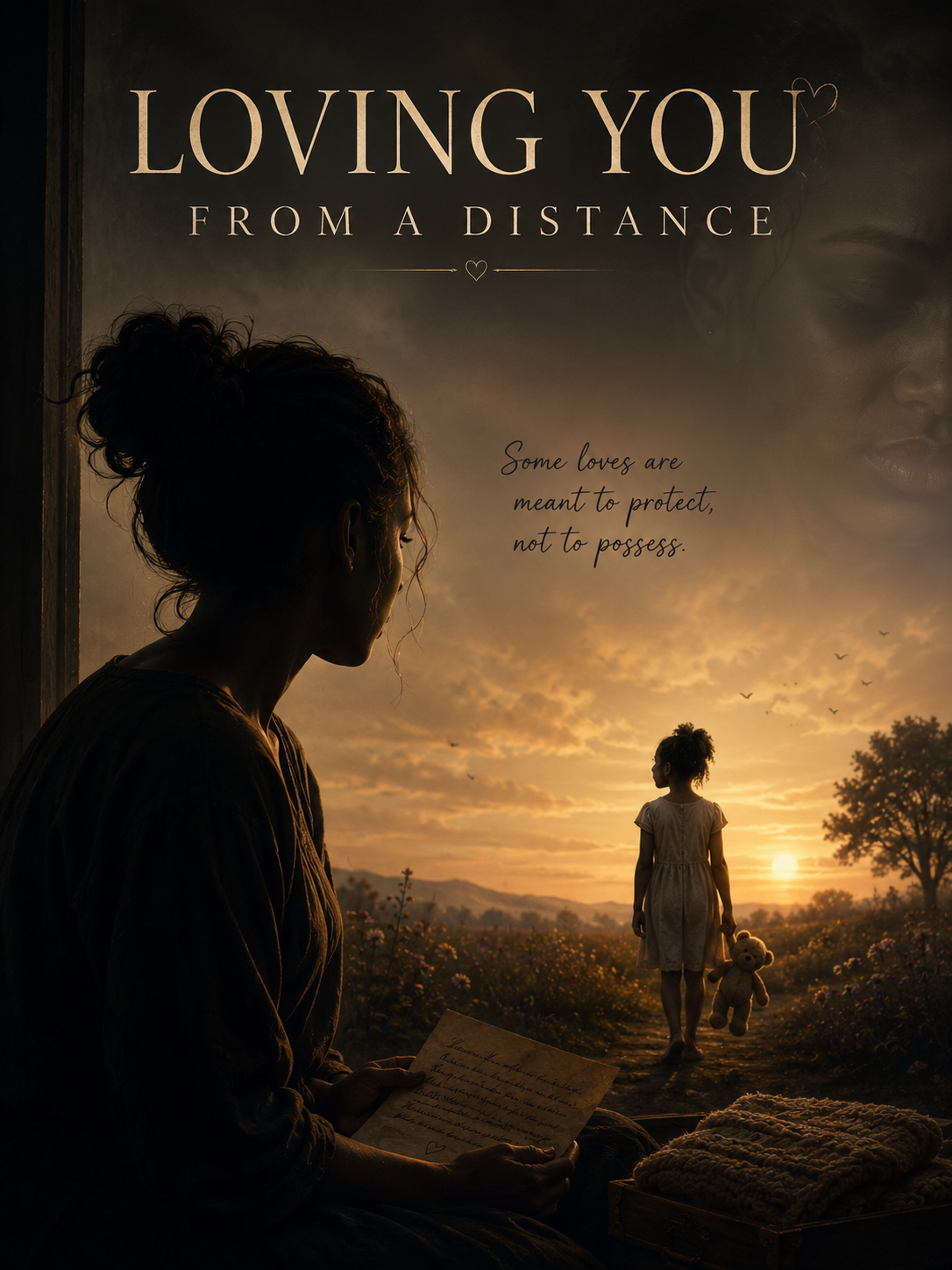
Loving You From a Distance
I remember the first time you cried. To the nurses and the women in the other beds, it might have been an annoyance, but to me, it was the greatest moment of my life. Your voice didn't sound like a scream; it sounded like Whitney Houston singing a song just for me. When you clung to my nipple, I knew you were mine—the best thing that ever happened to me.
But as I held you, the gaze of the people around us made me feel like the devil himself was sitting on my shoulder. In that maternity ward, a fourteen-year-old girl was a walking taboo. It was a sin that felt larger than Adam and Eve and the apple in the Garden of Eden. Because my parents had hidden me away from the community to cover the shame of how I let "Moses use his stick," your fate was decided before you even took your first breath.
The midwife brought the scissors down to the umbilical cord—the last physical thread of the life "baked in my oven". It didn't feel like a medical act; it felt like the flash of a flaming sword driving me out of the garden of motherhood. As the blades snapped shut, the tie was severed. You would not be mine. From that moment, my heart was shattered into fragments of glass that could never be replaced by another child. I became a person living in a black hole where no one could reach me, just falling to no end. To the world, I would have to call you my cousin.
Four years passed, and I found work at a daycare during the winter school recess. It was there that I saw you again. My aunt—the woman you called "Mom"—was tasked with your care and brought you to the center. The first time she realized I worked there, she became defensive. She pulled me aside and hissed the "golden rule": Remember, she is not yours but mine, so be careful what you say to her.
I obeyed, but I found ways to bond in the shadows. I made sure your cocoa was the warmest. When I read stories to the group, I looked only at you. I was a stranger to you, an "older cousin" and a "teacher," but every time I spoke your name, Ntsako, I was really saying, "I love you." In Xitsonga, your name means "Happiness," but to me, you were the happiness I had created but was never allowed to reach.
It was my older sister who first noticed. She saw the way my eyes lingered on Ntsako during family gatherings, a look of "shattered glass" that no cousin should have. One evening, she cornered me in the kitchen, the air heavy with the secret we all carried.
"You need to stop looking at her like that," she whispered, her voice tight with fear. "People are starting to talk."
I felt the "black hole" inside me finally cave in. "I am dying, Sis," I choked out, the words raw and bleeding. "Every time she calls me 'Cousin,' a piece of me disappears. I am falling to no end, and I just want the pain to stop. I want to scream that she is mine."
My sister grabbed my shoulders, her eyes hard. "You can't. If the truth comes out, it will destroy this family. The community will stone our parents with their words. You have to bear this. For the sake of the family, you have to stay in the shadows."
I realized then that my own sister was part of the "flaming sword" keeping me out of the garden. I promised to stay quiet, but in that moment, the last light in my "black hole" went out.
The Request
At a large family gathering later that year, the aunt moved through the crowd, "parading" Ntsako like a trophy. Suddenly, Ntsako broke away and walked toward me with a small plate of food. "Cousin, please feed me," she said. A heavy silence fell over the relatives who knew the secret. I knelt in the grass, ignoring the gaze of the people around me. As I guided the food to her mouth, it felt like a holy ritual. When the plate was empty, Ntsako climbed into my lap and fell into a peaceful sleep. For those few minutes, the "hole in my heart" felt momentarily repaired.
But the "void" was too vast to fill with stolen moments. The weight of the sister’s command to "bear the pain" became the final stone that pulled me under.
When Ntsako was twelve, the family gathered for a funeral. The biological mother was gone. As the aunt sat in the front row, the older sister stood up. She didn't just speak; she burst out with a terrifying, jagged anger that silenced the room.
"Look at this coffin!" she screamed, her voice cracking with self-loathing. "We did this! We harbored a secret like it was a treasure, but it was a poison. I stood in a kitchen and told my little sister to choke on her own heart so we wouldn't look bad to the neighbors. We watched her die every single day for twelve years just so we could keep up this lie!"
She turned to the aunt, her finger trembling with rage. "You paraded that child while the woman who birthed her was drowning in a black hole. We are all murderers here! We sacrificed her life for 'reputation,' and now she's gone."
The sister turned to the young girl and handed her a worn wooden box. "Ntsako, she didn't leave because she didn't love you. She was your mother."
Inside the box, Ntsako found the handmade blanket and a letter. The final words read: "Only your voice saying 'Mommy, I love you' could have repaired the hole in my heart. Until we meet again, I am loving you from a distance."